
Retatrutide

$42.99
Retatrutide 10mg (LY3437943) is an investigational triple hormone receptor agonist targeting GIP, GLP-1 and glucagon receptors. This compound is being studied in clinical research examining metabolic regulation and related outcomes.
- Compound: Retatrutide (LY3437943)
- Labelled strength: 10mg
- Presentation: Vial
- Research classification: Investigational triple agonist
Important: Retatrutide is not FDA-approved. This information does not establish suitability for human use or constitute a treatment recommendation.
Retatrutide 10mg – Scientific Information and Research Overview
Welcome to Bond Peptides, where we provide detailed scientific information about investigational compounds and their research backgrounds. If you are searching for Retatrutide for sale, it is important to understand the compound’s identity, investigational status, scientific properties and regulatory considerations. Retatrutide, also known as LY3437943, is an investigational triple hormone receptor agonist that has attracted significant attention in metabolic and pharmaceutical research.
What Is Retatrutide?
Retatrutide is an investigational peptide-based compound developed by Eli Lilly and Company. It is designed to activate three important hormone receptors involved in metabolic regulation: glucose-dependent insulinotropic polypeptide (GIP), glucagon-like peptide-1 (GLP-1) and glucagon receptors.
Unlike compounds that interact with only one or two metabolic hormone receptors, Retatrutide has been designed to engage all three pathways through a single molecule. This distinctive pharmacological profile makes it an important subject of ongoing clinical investigation.
Interest in Retatrutide for sale has increased alongside public attention surrounding its clinical development. However, its investigational status is an essential consideration when evaluating information about the compound.
How Does Retatrutide Work?
Understanding the mechanism of action is important when researching Retatrutide. Its triple-agonist design involves three receptor pathways:
1. GIP Receptor Activity
The glucose-dependent insulinotropic polypeptide receptor participates in glucose-dependent insulin secretion and metabolic signalling. Researchers are investigating its contribution to the overall pharmacological activity of Retatrutide.
2. GLP-1 Receptor Activity
The glucagon-like peptide-1 receptor is involved in glucose regulation, appetite-related signalling and gastrointestinal processes. Its interaction with Retatrutide is one of the key areas examined in metabolic research.
3. Glucagon Receptor Activity
The glucagon receptor contributes to glucose homeostasis and energy metabolism. Its inclusion in Retatrutide’s molecular design distinguishes the compound from single- and dual-receptor agonists.
Retatrutide: Key Research Areas
Scientific interest in Retatrutide extends across several areas of metabolic and pharmaceutical research. Clinical investigations have examined its pharmacological activity and potential effects on different health-related research endpoints.
Metabolic Regulation
Researchers are investigating how simultaneous activation of GIP, GLP-1 and glucagon receptors influences metabolic processes.
Body-Weight Research
Clinical studies have evaluated changes in body weight among participants in defined research populations. These findings remain subject to clinical interpretation and regulatory review.
Glucose Metabolism
Another important research area involves evaluating glucose-related measurements and metabolic responses during clinical investigation.
Cardiometabolic Research
Additional investigations are examining cardiometabolic outcomes and other endpoints to better understand the compound’s pharmacological profile.
These are research areas rather than established medical benefits. Retatrutide should not be presented as an approved treatment.
Retatrutide 10mg – Product Specifications
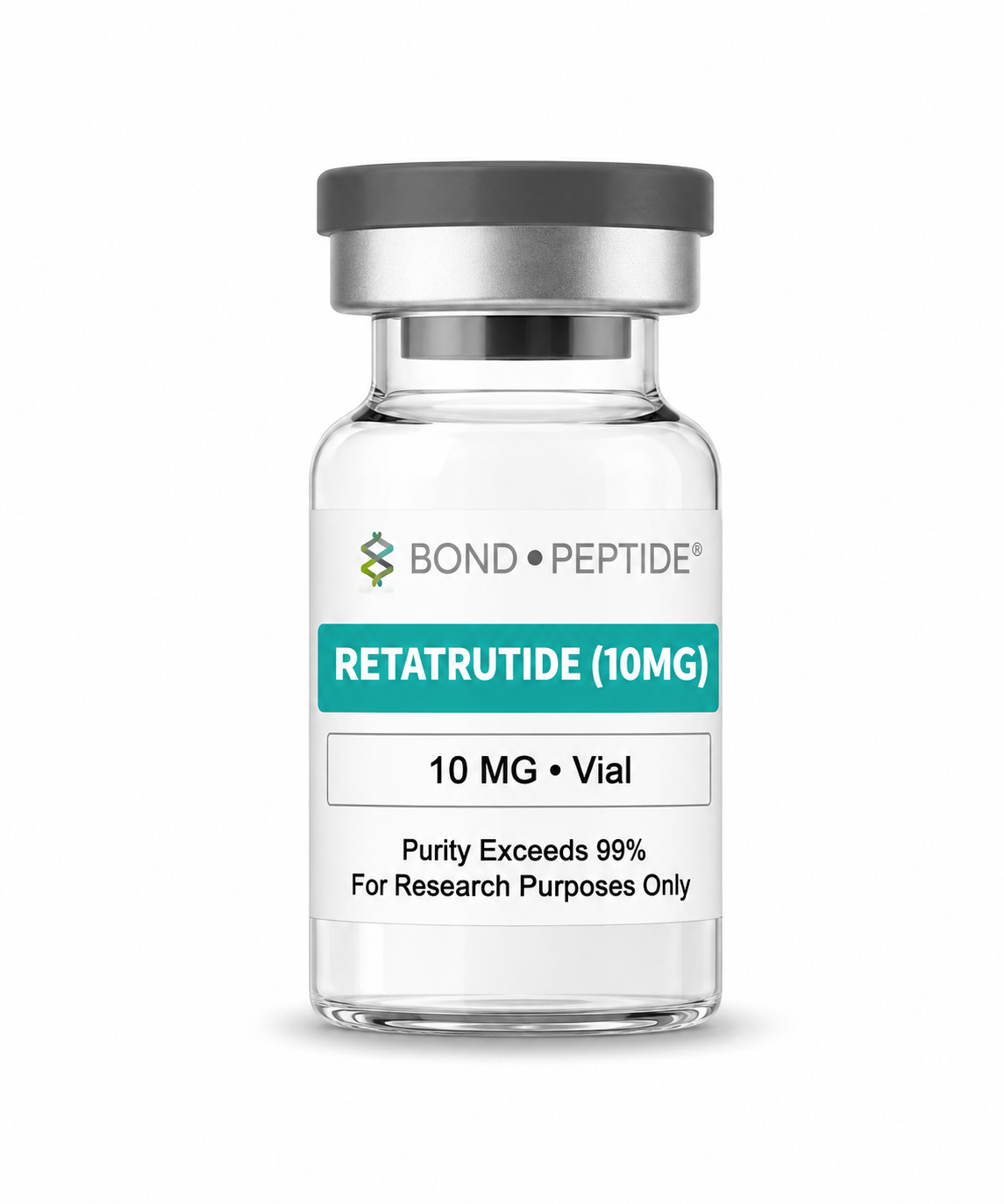
For anyone researching Retatrutide for sale, understanding product identification and labelled specifications is important. The product image associated with this page identifies the presentation as a 10mg vial.
| Specification | Details |
|---|---|
| Compound name | Retatrutide |
| Development code | LY3437943 |
| Labelled strength | 10mg |
| Presentation | Vial |
| Classification | Investigational triple hormone receptor agonist |
| Receptor targets | GIP, GLP-1 and glucagon |
| Developer | Eli Lilly and Company |
Retatrutide Composition and Molecular Characteristics
Retatrutide is a synthetic peptide-based molecule developed to interact with three metabolic hormone receptor pathways. Its molecular design is central to its investigation as a triple agonist.
The labelled 10mg quantity identifies the stated strength of the vial. It does not independently establish the actual chemical content, purity, excipient composition or analytical identity of a particular batch.
For accurate product documentation, the following details should be supported by appropriate analytical records:
- Verified compound identity.
- Measured peptide content.
- Analytical purity results.
- Batch identification and traceability.
- Available manufacturing and quality documentation.
Retatrutide Clinical Research and Scientific Studies
Retatrutide has been investigated through clinical research examining its pharmacological properties, safety profile and metabolic effects. Its development includes studies involving different participant populations and research endpoints.
Those interested in the science behind Retatrutide for sale searches should distinguish between clinical research findings, manufacturer announcements and independently reviewed scientific evidence.
For further information, consult registered Retatrutide clinical trials on ClinicalTrials.gov. This resource provides access to study descriptions, eligibility information, research status and published results where available.
Quality Documentation and Analytical Verification
Product identification should be supported by appropriate documentation rather than relying exclusively on packaging or label claims.
Relevant analytical documentation may include:
- Certificate of Analysis (COA).
- Analytical identity testing.
- High-performance liquid chromatography (HPLC) results, where applicable.
- Mass spectrometry results, where available.
- Batch-specific testing and traceability information.
Any claim regarding purity, laboratory testing or manufacturing quality should be supported by verifiable documentation for the specific product batch.
Regulatory Status of Retatrutide
An important consideration when evaluating websites advertising Retatrutide for sale is its regulatory classification. Retatrutide remains an investigational compound and has not received FDA approval as a medicine.
Clinical investigation does not automatically establish approval, safety or effectiveness for general human use. The FDA has also raised concerns about unapproved GLP-1-related products, including products marketed under research-use-only labels while being promoted for human consumption.
For current regulatory information, consult the FDA’s information on unapproved GLP-1 drugs.
Frequently Asked Questions About Retatrutide
What is Retatrutide?
Retatrutide is an investigational synthetic peptide-based compound designed to activate GIP, GLP-1 and glucagon receptors. It is being studied in clinical research involving metabolic regulation.
Why are people searching for Retatrutide for sale?
Interest in Retatrutide has grown alongside public attention surrounding its clinical development and triple-receptor mechanism. However, search interest and commercial listings do not establish regulatory approval or legitimate availability for human use.
What is the difference between Retatrutide and other peptide compounds?
Retatrutide has a triple-agonist design involving GIP, GLP-1 and glucagon receptors. Some other investigational compounds target only one or two of these pathways.
What does Retatrutide 10mg mean?
The 10mg designation refers to the strength stated on the product label. Independent analytical documentation is needed to verify the actual content and identity of a particular batch.
Is Retatrutide FDA approved?
No. Retatrutide remains investigational and has not received FDA approval as of November 2026.
Where can I find reliable Retatrutide research?
ClinicalTrials.gov, peer-reviewed scientific publications and official regulatory sources provide more reliable information than unsupported commercial claims.
Additional Information About Bond Peptides
For additional information about the website and its background, visit the About Bond Peptides page.
Important research and regulatory notice: This page is intended for scientific and educational information. Retatrutide is investigational and is not an FDA-approved medicine. Nothing on this page constitutes medical advice, a treatment recommendation or an offer of an approved medicine.
Be the first to review “Retatrutide”
Related products


Aesthetic and Skin Rejuvenation
Reviews
There are no reviews yet.