
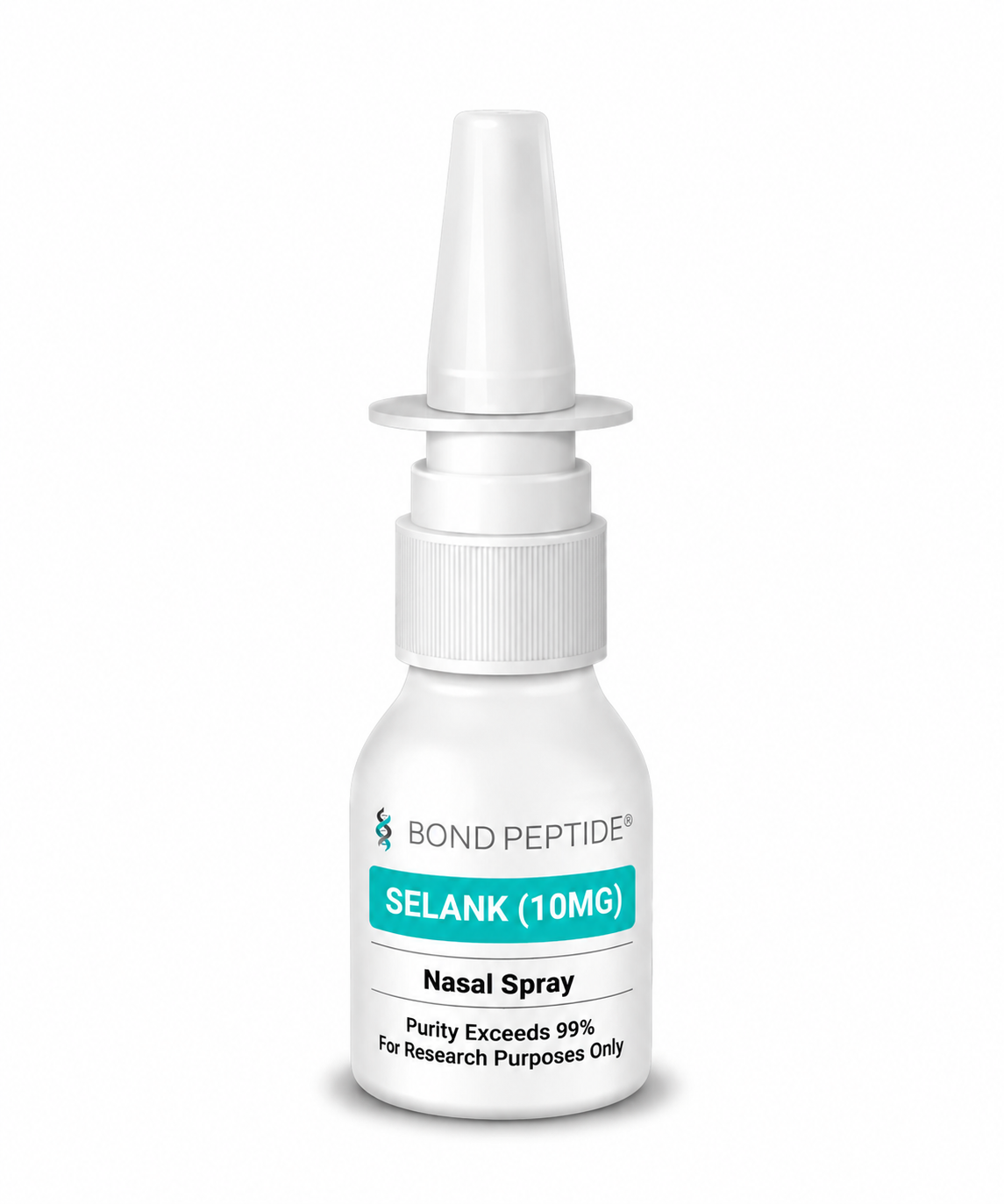
Selank Nasal Spray
$37.99
Selank Nasal Spray is an intranasal formulation associated with Selank, a synthetic heptapeptide derived from tuftsin. Its scientific background includes investigations into peptide pharmacology, enkephalin metabolism and neurological signalling.
- Compound: Selank
- Classification: Synthetic heptapeptide
- Amino-acid sequence: Thr-Lys-Pro-Arg-Pro-Gly-Pro
- Presentation: Nasal spray
Regulatory information: Selank is not FDA-approved for human therapeutic use in the United States.
Selank Nasal Spray – Peptide Composition and Scientific Research
Welcome to Bond Peptides, where we provide detailed scientific information about investigational peptide compounds and their research backgrounds. Selank Nasal Spray is an intranasal formulation associated with Selank, a synthetic heptapeptide derived from the naturally occurring peptide tuftsin. Its molecular structure and proposed neurological activity have made it a subject of scientific investigation, particularly in research examining neurochemical signalling and peptide pharmacology.
What Is Selank?
Selank is a synthetic peptide developed in Russia. It is based on the structure of tuftsin, an endogenous peptide associated with immune-system signalling. Selank extends the original tuftsin sequence with additional amino acids, producing a seven-amino-acid peptide.
The compound has been investigated for its proposed effects on neurochemical pathways, including research into enkephalin metabolism and other neurological signalling processes.
Interest in Selank Nasal Spray is closely connected to the intranasal formulation investigated in some published research. However, findings from studies involving particular formulations cannot automatically be applied to other commercially labelled products.
Selank Peptide Composition and Molecular Structure
Selank is classified as a synthetic heptapeptide because its molecular structure contains seven amino-acid residues.
Published amino-acid sequence: Thr-Lys-Pro-Arg-Pro-Gly-Pro.
| Specification | Information |
|---|---|
| Compound | Selank |
| Classification | Synthetic heptapeptide |
| Parent peptide | Tuftsin |
| Amino-acid sequence | Thr-Lys-Pro-Arg-Pro-Gly-Pro |
| CAS number | 129954-34-3 |
| Formulation category | Intranasal formulation |
| Research background | Peptide pharmacology and neurological signalling |
The exact concentration, excipients, preservatives and other formulation ingredients must be verified from the manufacturer’s documentation for the specific product. The labelled strength alone does not establish the complete composition.
Understanding the Selank Nasal Formulation
Intranasal formulations are an area of pharmaceutical research because the nasal cavity provides a distinct route for investigating the delivery of certain compounds.
Published Selank studies have included intranasal administration. However, the results of those studies relate to their specific research materials and protocols. They do not establish the quality, absorption, safety or effectiveness of every product described as Selank Nasal Spray.
When examining an intranasal peptide formulation, relevant scientific and quality considerations include:
- Verified peptide identity.
- Concentration and measured peptide content.
- Formulation ingredients and excipients.
- Microbiological quality and sterility documentation, where applicable.
- Container and delivery-system specifications.
- Batch-specific analytical documentation.
Selank Research and Proposed Mechanisms of Action
Scientific investigations into Selank have examined several possible biochemical mechanisms. These findings remain areas of research rather than established clinical effects.
Enkephalin Metabolism
A published experimental study investigated the inhibitory effect of Selank on enzymes involved in enkephalin degradation. The researchers examined whether this interaction could help explain some of the compound’s proposed pharmacological activity.
These findings provide a scientific basis for further investigation, but they do not establish an approved therapeutic application.
Neurochemical Signalling
Researchers have also explored possible interactions between Selank and neurological signalling pathways. The precise molecular mechanisms and their relevance to human health require further independent investigation.
Peptide Structure and Stability
Selank’s heptapeptide structure is an important aspect of its pharmaceutical research background. Its relationship to tuftsin and the additional Pro-Gly-Pro sequence are relevant when examining its molecular characteristics.
Selank and Semax: Understanding the Differences
Selank and Semax are two distinct synthetic peptides that have been investigated in Russian pharmaceutical research. Although both have been associated with intranasal formulations, they differ in their parent peptide structures and scientific research backgrounds.
| Feature | Selank | Semax |
|---|---|---|
| Classification | Synthetic heptapeptide | Synthetic heptapeptide |
| Parent sequence | Tuftsin | ACTH fragment |
| Amino-acid sequence | Thr-Lys-Pro-Arg-Pro-Gly-Pro | Met-Glu-His-Phe-Pro-Gly-Pro |
| Research area | Peptide pharmacology and neurological signalling | Neuropharmacological research |
For additional information about the related compound, see the Semax Nasal Spray scientific information page.
Selank Nasal Spray – Product Identification
The product presentation associated with this page is identified as a Selank nasal spray. Product identification should be distinguished from independently verified chemical composition and pharmaceutical quality.
- Product name: Selank Nasal Spray
- Active compound: Selank
- Peptide classification: Synthetic heptapeptide
- Formulation category: Nasal spray
- Parent peptide: Tuftsin
Any stated concentration, total peptide quantity, spray volume or ingredient information should be confirmed against the actual manufacturer’s product documentation before publication.
Quality Documentation and Product Verification
Reliable product identification requires appropriate analytical evidence. A product label or advertised purity percentage is not sufficient on its own to establish chemical identity or formulation quality.
Relevant documentation may include:
- Certificate of Analysis (COA).
- Peptide identity testing.
- HPLC analytical results, where applicable.
- Mass spectrometry documentation, where available.
- Batch identification and traceability.
- Formulation and microbiological quality documentation, where applicable.
Testing claims should only be included when supported by documentation relating to the actual product batch.
Regulatory Status and Scientific Limitations
Selank does not have FDA approval for human therapeutic use in the United States. Published research, historical registration in another country and commercial availability do not establish FDA approval or authorize the marketing of an unapproved product for human consumption.
The available clinical literature is limited, and findings from smaller studies should not be interpreted as conclusive proof of safety or effectiveness. Products marketed for research purposes are not equivalent to approved pharmaceutical products.
For scientific background, consult the original research published in PubMed on Selank and enkephalin-degrading enzymes.
Frequently Asked Questions About Selank Nasal Spray
What is Selank Nasal Spray?
Selank Nasal Spray describes an intranasal formulation containing or identified with Selank, a synthetic heptapeptide derived from tuftsin. Intranasal formulations have appeared in published research involving this compound.
What is Selank made of?
Selank is a synthetic seven-amino-acid peptide with the sequence Thr-Lys-Pro-Arg-Pro-Gly-Pro. Additional ingredients in a particular nasal formulation depend on its manufacturer and formulation documentation.
What is the difference between Selank and Semax?
Selank is derived from the tuftsin peptide sequence, whereas Semax is derived from an ACTH fragment. Both are synthetic heptapeptides, but they have different molecular sequences and research backgrounds.
What does intranasal formulation mean?
An intranasal formulation is designed for administration through the nasal cavity. Its formulation characteristics, concentration and quality require appropriate pharmaceutical documentation.
Has Selank been studied scientifically?
Yes. Published studies have investigated Selank’s biochemical properties, proposed mechanisms and possible neurological activity. However, the overall human evidence remains limited.
Is Selank FDA approved?
No. Selank does not have FDA approval for human therapeutic use in the United States.
Where can I find published Selank research?
PubMed provides access to published scientific literature, including studies investigating Selank’s proposed biochemical mechanisms and pharmacological properties.
Additional Information About Bond Peptides
To learn more about the website and its background, visit the About Bond Peptides page.
Important notice: This content is provided for scientific and educational information. Selank is not FDA-approved for human therapeutic use in the United States. This information does not constitute medical advice, a treatment recommendation or an endorsement of unapproved human use.
Be the first to review “Selank Nasal Spray”
Related products


Aesthetic and Skin Rejuvenation
IGF1-LR3 Nasal Spray 2 mg and BPC-157 Nasal Spray 5 mg | Bond Peptide


Reviews
There are no reviews yet.